
Pack Up Your Kitchen with Peace of Mind
nPacking up your kitchen can feel like one of the most stressful parts of getting ready for storage. Plates chip, glasses crack, and somehow the box labeled “fragile” always seems to make people nervous. The good news is that with the right approach and the right moving supplies, you can pack your dishes and glasses safely, neatly, and like a total pro.
Whether you are storing your kitchen items during a move, renovation, downsizing project, or just need extra space, taking a little extra time upfront can help protect your breakables and save you from unpleasant surprises later.
Start with the Right Moving Supplies
Before you pack a single mug or dinner plate, make sure you have the proper materials. Quality moving supplies help protect fragile kitchen items in storage.
A few essentials include:
- Sturdy moving boxes
- Dish pack boxes or heavy-duty boxes
- Packing paper
- Bubble wrap
- Packing tape
- Box labels or markers
- Dividers for glasses, if available
If you need to stock up first, our moving supplies make it easy to get everything you need in one place. It is always better to use too much protection than not enough for glassware and dishes.
Sort Before You Pack
Start by sorting everything before boxing it up. Separate your kitchen items by type and weight. Put plates with plates, bowls with bowls, mugs with mugs, and glasses with glasses.
This helps in two ways. First, it makes packing more organized. Second, it helps you avoid mixing heavy items with delicate ones, which can cause damage in storage.
As you sort, set aside anything chipped, cracked, or that you no longer want. There is no point paying to store dishes you are ready to part with.
Build a Cushioned Base in Every Box
Before placing anything inside, line the bottom of each box with a generous layer of crumpled packing paper or bubble wrap. This base acts like a shock absorber and adds an extra layer of protection if the box is bumped or shifted.
Never place dishes or glasses directly against the bottom of a bare box. Even strong boxes need interior cushioning.
How to Pack Plates and Bowls
Plates should never be stacked flat in a moving box. Instead, wrap each plate individually in packing paper and place them vertically, like records on a shelf. This reduces pressure and makes them less likely to crack.
Bowls can also be wrapped one by one and nested carefully, but make sure there is paper or padding between each piece. For larger serving bowls, add extra cushioning around the rim, since that is often the most vulnerable area.
Place heavier plates and bowls at the bottom of the box, with lighter items on top.
How to Pack Glasses and Mugs
Glasses need a little extra attention. Wrap each glass individually with packing paper, paying special attention to the stem or rim if it is a wine glass or delicate drinkware. Stuff a little crumpled paper inside each glass to help support it from within, but do not overstuff or force it.
Then wrap the outside and place glasses upright in the box. Avoid laying them on their sides. If you have box dividers, even better. They help keep glasses from bumping into one another.
Mugs should also be wrapped individually, especially around the handle. Handles are often the first thing to break, so do not skip that step.
Fill Empty Spaces
One of the biggest mistakes people make when packing kitchen items for storage is leaving empty space in the box. Gaps allow items to shift during transport or while being moved around.
Once your dishes or glasses are packed, fill any open spaces with crumpled packing paper, bubble wrap, or other soft packing material. When you gently shake the box, nothing inside should move.
This step may seem minor, but it makes a major difference in keeping fragile items secure.
Do Not Overpack the Box
It is tempting to fit as much as possible into one box, especially when packing heavy items like dishes. Resist that urge.
Boxes packed with kitchenware can get heavy very quickly. Overloaded boxes are harder to lift, more likely to break, and much riskier for fragile contents. Keep each box at a manageable weight, even if that means using more boxes.
Small or medium boxes are often better than large ones for dishes and glasses.
Label Everything Clearly
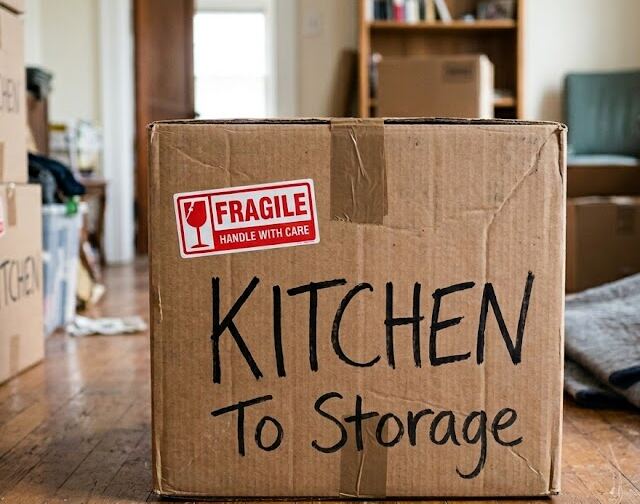
Once the box is packed and taped shut, label it clearly on multiple sides. Write things like:
- Kitchen
- Fragile
- Dishes
- Glassware
- This Side Up
Clear labeling helps you stay organized and makes it easier to handle those boxes with care later.
Store Smart
After everything is packed, think about placement in your storage unit. Fragile kitchen boxes should go on a flat, stable surface and never underneath heavy furniture or bulky bins.
Keep dish and glass boxes stacked carefully, with heavier boxes on the bottom and lighter ones above. If possible, place especially delicate items where they are less likely to get bumped as you access the unit.
Pack Once, Pack Right
Packing dishes and glasses for storage does not have to be complicated, but it does need to be done carefully. The right moving supplies, smart wrapping techniques, and well-packed boxes can go a long way toward protecting your kitchen items.
A little extra effort now means less stress later when you open those boxes and find everything just the way you packed it.
If you are getting ready for storage, be sure to check out our moving supplies to make the job easier. With the right materials and a little know-how, you can pack your kitchen like a pro.